Network4Work: Lessons from Vilanova i la Geltrú and Lousada
Being a Lead Expert in an URBACT transfer network offers a unique opportunity to experience the many realities of Europe, as our CEO Petra Grgasović often highlights. Sometimes these encounters are inspiring and energising; other times, they are serious and deeply emotional.
Discussions about the future of labour markets in European cities can easily move between these two extremes—and this week’s visits to Vilanova i la Geltrú (Spain) and Lousada (Portugal) were a perfect example of that.
While the two cities face very different challenges, both are rethinking their relationship with work. Vilanova is reconnecting with its maritime identity through the development of the blue economy, while Lousada is working to shift the mindset of local companies and workers in order to reduce the gap between job supply and demand.
But how complex are these challenges, really?
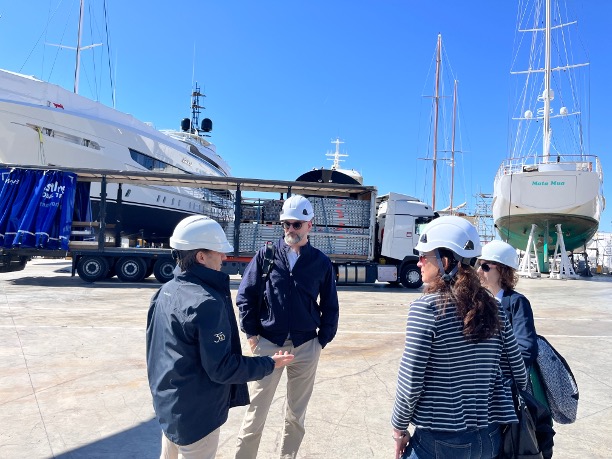
It would be easy to see them as questions of social or employment policy alone—but that would miss the bigger picture. Through interviews with more than ten stakeholders in each city, one thing became clear: managing the labour market begins long before employment itself. It touches on childcare services, education systems (formal and informal), research and academia, housing and spatial planning, mobility, and even the ability to anticipate future skills and invest in young talent.
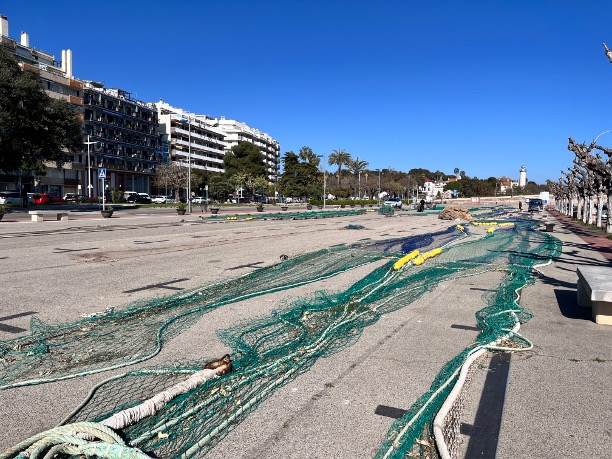
In Vilanova i la Geltrú, the connection to the Mediterranean Sea is more than symbolic—it is becoming a strategic direction. Local stakeholders, such as Miquel À. Lliteras and Xavier Socias spoke about the blue economy not only as an economic opportunity, but as a way to fully redefine the city’s identity.
This transformation is unfolding on several fronts. On one side, efforts focus on renewing the fishery community and revitalising the local construction sector. On the other, the city is leveraging its industrial base, research capacity, and higher education institutions to develop a blue economy innovation hub. As Jordi Romero, general manager of Neàpolis, and Anna Punyet from the City Council emphasised, the coming two years will be crucial. Their goal is to build a collaborative, self-sustaining platform—one that can gradually bring the vision of a truly “blue Vilanova” to life. Could this be a direction for Croatian coastal cities as well?
If Vilanova’s story is about rediscovering identity through the sea, Lousada’s is about something else. The textile industry—deeply rooted in the municipality—has been undergoing significant changes and pressures in recent years. While Lousada remains closely tied to this traditional sector, the nature of work is shifting.
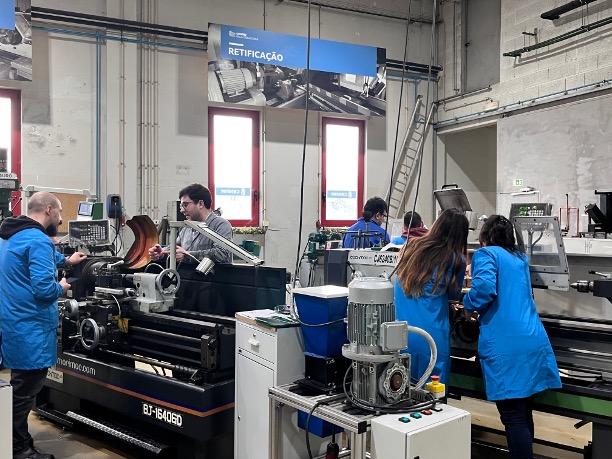
Councillor Maria do Céu Rocha has a clear understanding of both the strengths and the limitations of the local labour market. Lousada has already made significant efforts to reduce unemployment, strengthen vocational training, and support the upskilling of its workforce. Yet, as she and other stakeholders emphasised, these efforts alone are not enough. What makes Lousada’s approach particularly promising is the growing willingness of local employers to become part of the solution. As Nuno Oliveira, CEO of SOMACOORDENADAS, pointed out, key companies in the area are increasingly open to working together to address shared labour market challenges.
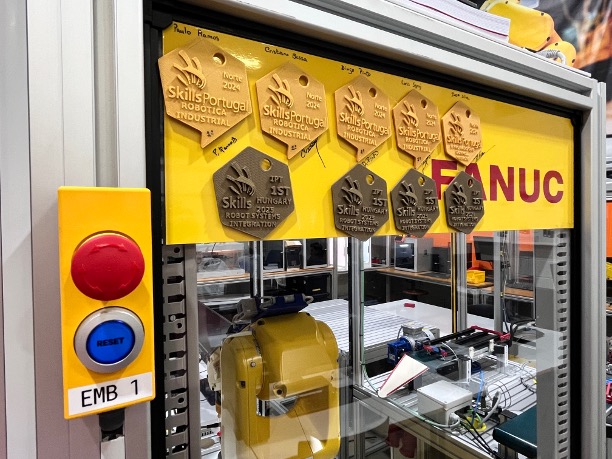
The striking truth is that local efforts to shape labour markets will, in many ways, determine Europe’s future. If that sounds dramatic, it is only because the stakes are genuinely high.
What became clear in both Vilanova i la Geltrú and Lousada is that the future of work is not something abstract or distant—it is being shaped every day through local decisions, partnerships, and priorities. From early education and skills development to industrial strategy and urban planning, these choices form the foundations of resilient communities.
At the same time, relying solely on imported workforce or external production is not a sustainable path forward. While openness and exchange remain essential to Europe’s identity, long-term resilience depends on the ability of cities and regions to recognise, develop, and retain their own potential.
The examples of Network4Work partners show that this is not about choosing between tradition and innovation, but about carefully aligning the two. Whether through reconnecting with the sea or rethinking a long-standing industrial base, both Vilanova and Lousada demonstrate that meaningful change starts locally.
Perhaps this is the most important takeaway: Europe’s future will not be decided in a single place or policy, but in the collective capacity of its cities to adapt, collaborate, and invest in their people.