
Designing for Marine Life: From Shipwrecks to 3D-Printed Artificial Reefs
Can architecture, innovative materials and 3D printing contribute to the restoration of marine ecosystems? Through the RestReef programme, we explored how the design of underwater structures can support marine life, and why successful ecological restoration requires much more than simply placing objects on the seabed.
When we think about architecture and design, we usually imagine buildings, streets, public spaces and other elements of the built environment. We consider how people use spaces, how materials interact with their surroundings, and how physical structures can contribute to better living conditions. But what happens when we apply these same principles beneath the sea?
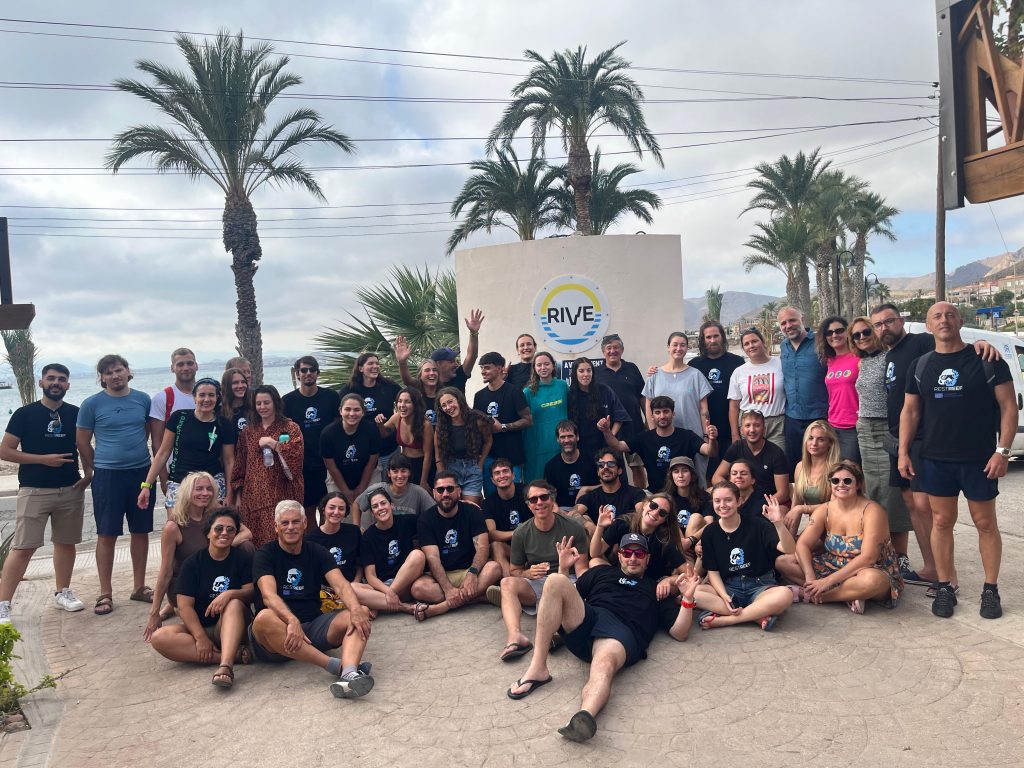
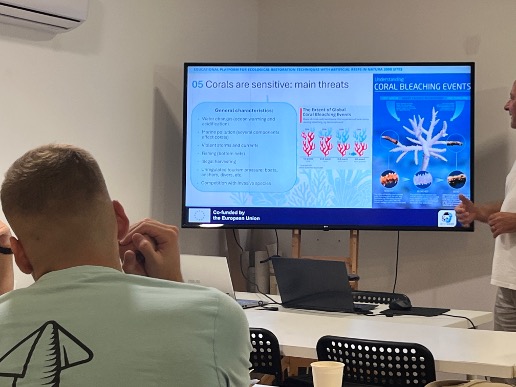
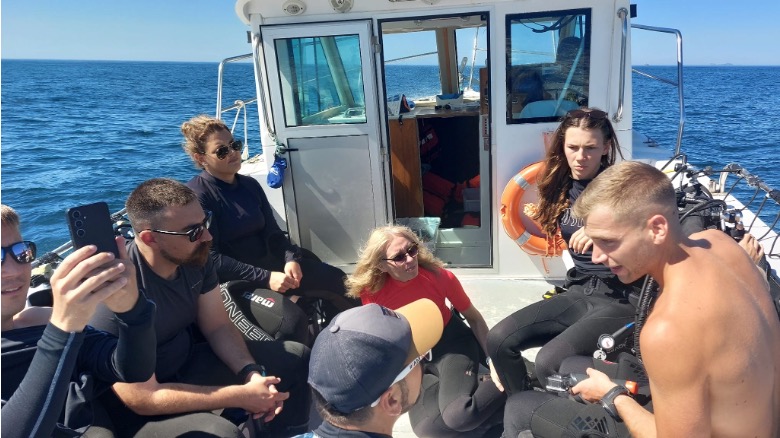
This was one of the fascinating questions explored through the RestReef programme, an international educational initiative focusing on ecological restoration techniques using artificial reefs in Natura 2000 sites. For ERKON, whose work combines architecture, spatial planning, sustainable development, innovation and education, participation in RestReef offered an opportunity to explore a different application of familiar principles: designing physical environments not for people, but for marine organisms. Through lectures, practical activities and underwater exploration, the programme introduced us to the relationship between marine ecology, engineering, materials science and the increasingly sophisticated design of artificial reefs.
When a Shipwreck Becomes a Reef
One of the most memorable experiences were our dives in Croatia, Portugal and Spain, such as the dive at the Primavera shipwreck near the Berlengas Islands, off the Atlantic coast of Portugal.
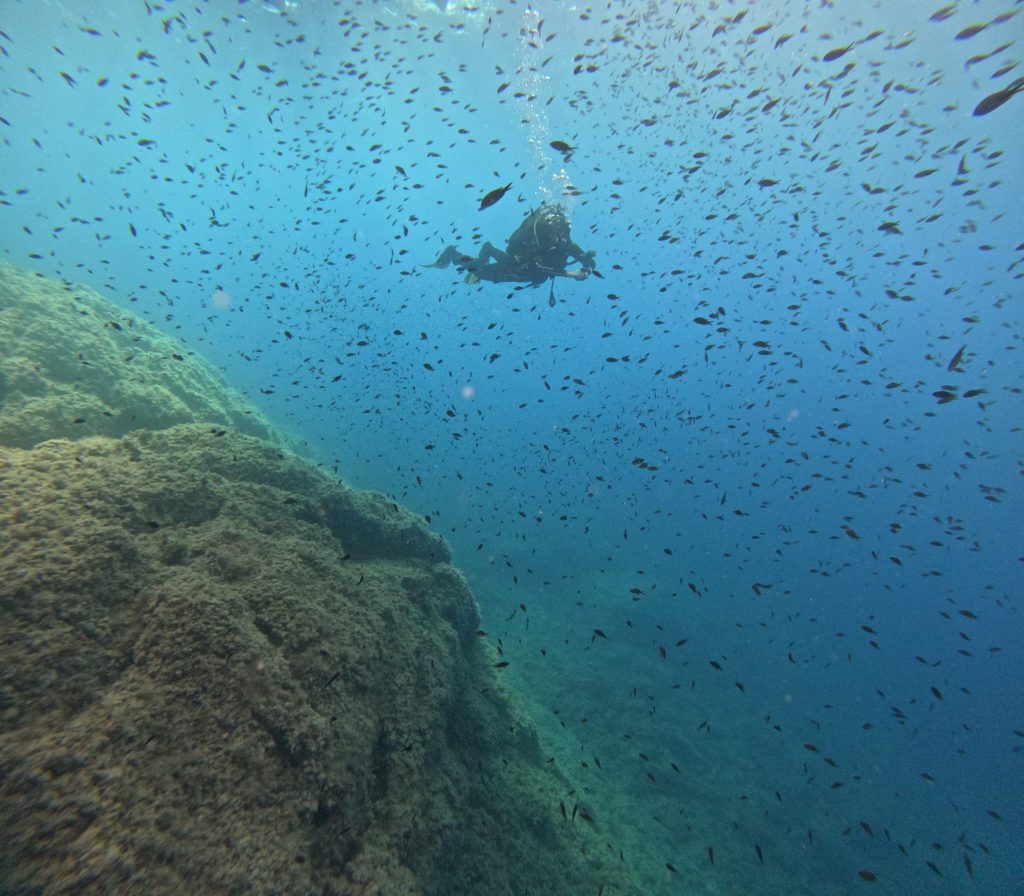
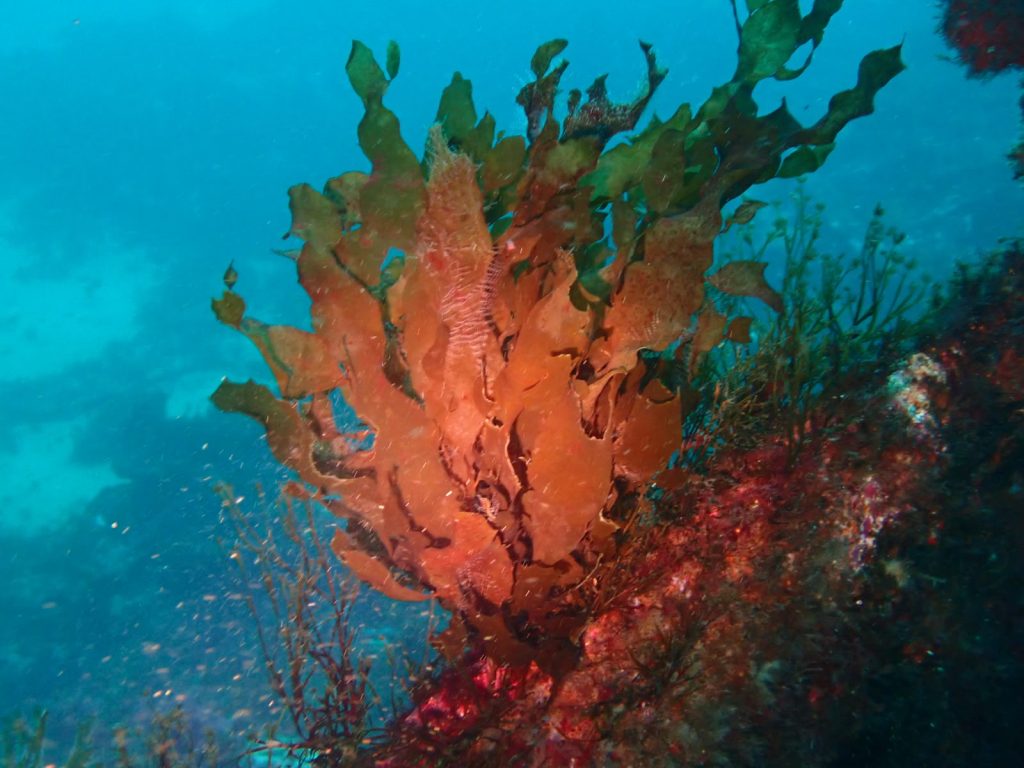
Shipwrecks offer an interesting opportunity to observe how human-made structures interact with marine ecosystems. Although they were never intended to provide ecological functions, submerged vessels can gradually become habitats for different marine organisms. The physical structure of a wreck introduces hard surfaces, vertical elements, irregular shapes, cavities and sheltered spaces into the underwater environment. These features can provide attachment sites for algae and sessile organisms, while offering refuge and feeding opportunities for fish and mobile invertebrates.
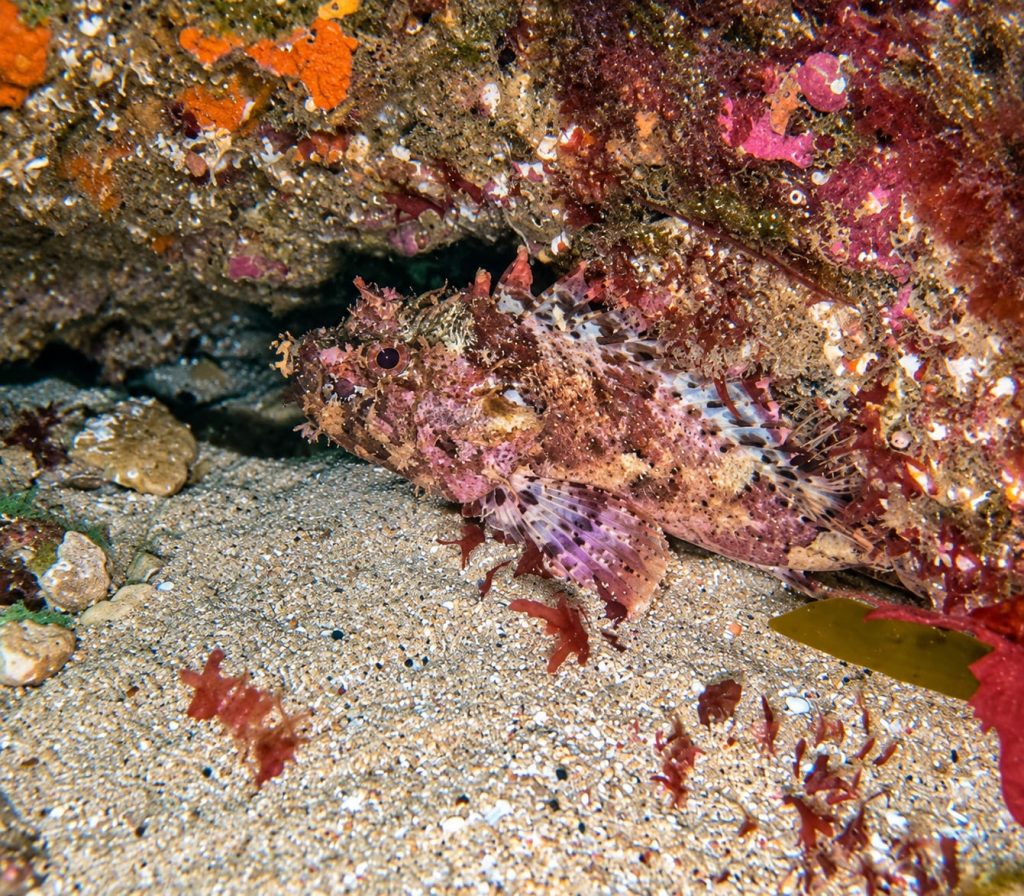
The experience of wreck dives illustrated an important ecological principle: the physical characteristics of a habitat influence which organisms can occupy it and how they use the available space. A smooth, exposed surface provides different opportunities from a rough surface with numerous small cavities. Similarly, a large opening may accommodate fish, while smaller crevices can provide shelter for invertebrates and juvenile organisms.
Of course, observing marine life around a shipwreck does not automatically prove that the wreck increases biodiversity. Some organisms may be attracted from surrounding habitats, while others may already inhabit the nearby natural reef. Establishing the ecological contribution of the wreck would require systematic monitoring and comparison with surrounding habitats.
Designing Habitats, Not Just Underwater Objects
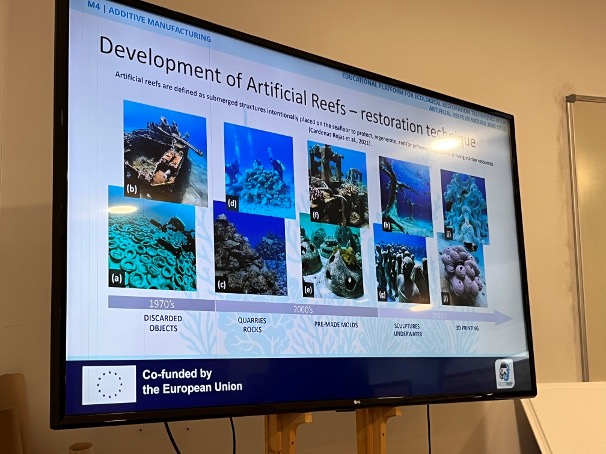
Artificial reefs are human-made structures placed in aquatic environments to fulfil specific functions. Depending on their purpose, they may provide habitat, support ecological restoration, contribute to coastal protection or serve other marine management objectives. Their ecological performance depends on several interconnected factors, including location, depth, environmental conditions, material composition and physical design.
One of the most interesting aspects of the RestReef training was the presentation on additive manufacturing, which explored how advanced manufacturing technologies can be used to create artificial reefs with complex geometries. Traditionally, underwater structures have often been constructed using relatively simple shapes and conventional materials. However, advances in digital design and additive manufacturing are creating new opportunities to develop structures that respond more precisely to ecological requirements.
Rather than treating an artificial reef as a single solid object, designers can approach it as a collection of interconnected habitats. Different organisms require different conditions. Some benefit from large openings and passages, while others need narrow crevices, protected surfaces or small spaces in which to settle.This means that the design of an artificial reef can influence the variety of habitats it provides. The challenge is therefore not simply to create an object that can survive underwater, but to understand how its geometry can support the organisms expected to use it.
The Architecture of an Artificial Reef
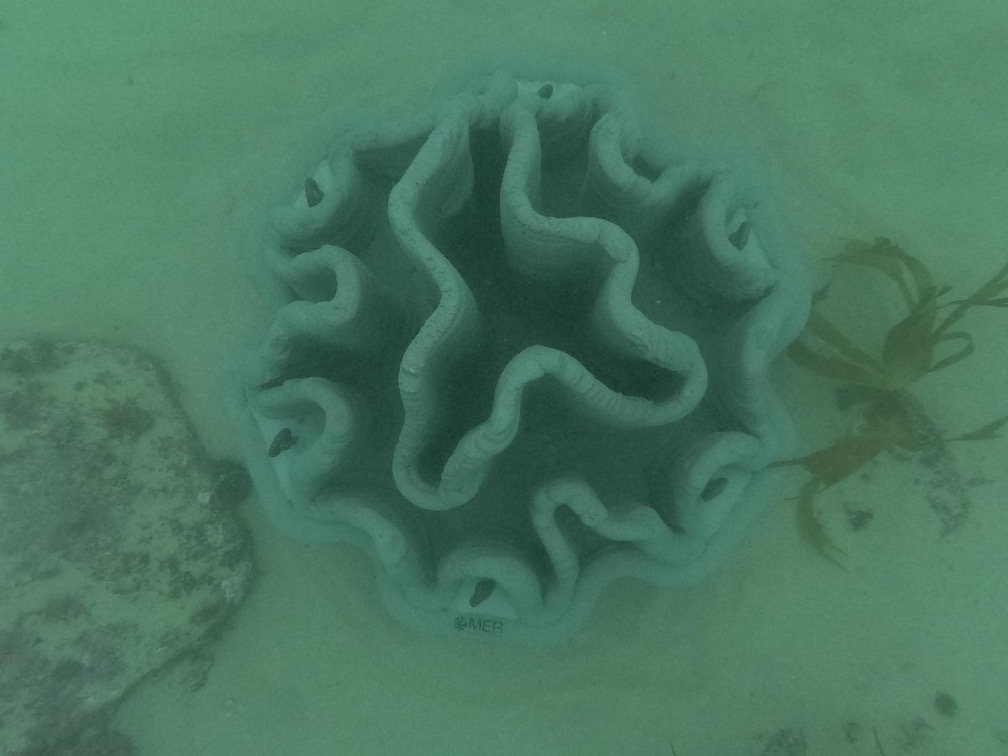
A particularly interesting example presented during the training was the Modular Eco-Engineering Reef (MER), a concept developed to incorporate different habitat types within a single modular structure. The design includes several features intended to support marine organisms. A labyrinth of passages and refuges provides spaces that fish may use for shelter and movement. Other openings are intended for bottom-dwelling species, while rough surfaces and the textures created by the 3D printing process are designed to facilitate the settlement of benthic organisms.
The modular approach also allows individual elements to be combined into larger structures, potentially increasing habitat complexity.What makes this approach particularly interesting from an architectural perspective is the relationship between form and function.The shape of the reef is not determined exclusively by structural or aesthetic considerations. Instead, its geometry is developed around ecological objectives. The size of openings, arrangement of internal spaces, texture of surfaces and connections between modules all become design decisions with potential biological consequences.
In many ways, this resembles the principles of human-centred design used in architecture and urban planning. We first need to understand who will use the space, what conditions they require and how the physical environment can respond to those needs. The important difference is that, in this case, the users are fish, invertebrates, algae and other marine organisms.
Of course, creating a complex structure does not guarantee ecological success. The suitability of a design depends on the species present, local environmental conditions and the intended function of the reef. Still, the MER concept demonstrates how ecological knowledge can be translated into physical design.
What Should an Artificial Reef Be Made Of?
Geometry is only one part of the challenge. The choice of materials is equally important. Artificial reefs must remain structurally stable in demanding marine conditions while providing surfaces suitable for biological colonisation. Their materials also interact directly with seawater, making chemical compatibility and potential environmental impacts essential considerations. The RestReef presentation introduced research into cementitious materials and the use of different mineral, organic and waste-derived ingredients in artificial reef production.
Among the materials explored were limestone, dolomite sand, mussel shells, brick dust, fly ash, metakaolin and rice husk ash. These ingredients are interesting for several reasons. Some may influence the physical and chemical properties of the resulting mortar, while others offer opportunities to investigate the use of alternative raw materials or industrial and biological by-products. For example, mussel shells represent a calcium-carbonate-rich biological material, while brick dust and certain industrial by-products can be explored as constituents of alternative cementitious formulations.
From a circular economy perspective, this opens an interesting possibility: could materials that would otherwise be treated as waste become useful components of structures designed to support marine ecosystems? However, the answer is not as straightforward as it might initially appear. Using recycled or waste-derived materials does not automatically make an artificial reef environmentally sustainable. The presentation included research investigating the effects of different mortar formulations on seawater parameters and coral growth, highlighting the importance of evaluating material composition rather than assuming that all cement-based structures behave in the same way.
How 3D Printing Changes the Design Process
One of the most promising aspects of additive manufacturing is its ability to produce complex geometries that would be difficult or expensive to manufacture using conventional techniques. In additive manufacturing, objects are produced by depositing or forming material according to a digital model, typically layer by layer. For artificial reefs, this creates opportunities to integrate irregular surfaces, interconnected cavities, different opening sizes and complex internal structures into a single design.
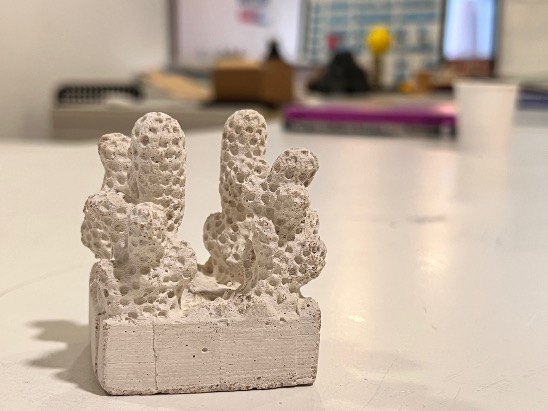
The RestReef presentation demonstrated several approaches, including the use of 3D-printed plastic models to create silicone moulds for producing experimental substrates, as well as direct extrusion-based printing of cementitious materials. These approaches can serve different purposes.Small experimental substrates allow researchers to investigate how organisms respond to different surface textures and material compositions under controlled conditions. Larger structures and modular elements can be developed to investigate more complex habitat designs and potential applications in marine environments.
A digitally designed structure may appear promising, but it must also be manufacturable, mechanically stable and suitable for its intended environment. Designing artificial reefs therefore involves balancing ecological requirements with engineering constraints, manufacturing capabilities and environmental considerations.
From Suitable Surfaces to Living Communities
Even the most carefully designed artificial reef is initially only a physical structure. Its ecological function develops through interactions with marine organisms and the surrounding environment. The process of biological colonisation may begin with microorganisms and biofilms, followed by algae and other organisms capable of attaching to hard surfaces. Over time, the developing biological community can provide additional habitat and food resources for other species.
However, the sequence and success of colonisation depend on local conditions, including water movement, light, temperature, sedimentation and the availability of organisms capable of settling on the structure. The RestReef training also explored coral propagation, introducing another important dimension of marine restoration: the biological processes needed to establish and maintain living organisms.
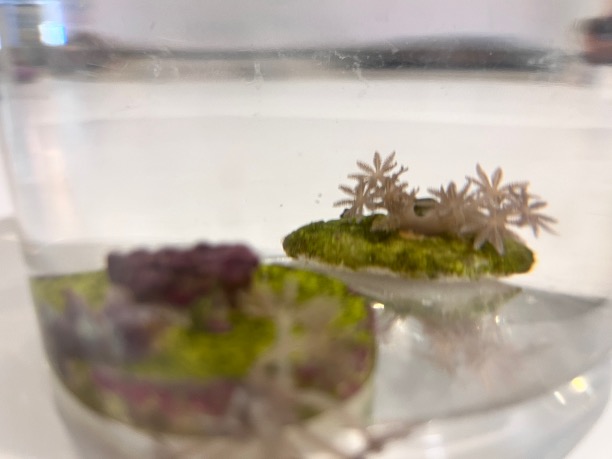
The participants learned about coral fragmentation, a technique in which fragments are taken from healthy parent colonies and cultivated under controlled conditions. The presentation explained the importance of selecting healthy colonies, preparing and attaching fragments, supporting tissue recovery and maintaining suitable conditions for growth.
Although this session focused primarily on coral propagation in aquarium environments, it reinforced an important principle relevant to ecological restoration: providing a suitable substrate is not enough if the biological conditions required for survival are absent. It also raised questions about responsible sourcing, long-term survival and the environmental consequences of collecting organisms from natural ecosystems.
What Can Architecture and Urban Planning Learn from Marine Restoration?
For ERKON, one of the most valuable aspects of the RestReef experience was discovering how closely the challenges of artificial reef design resemble those encountered in architecture, urban planning and sustainable development. In both terrestrial and marine environments, the design process begins with understanding an existing system. We need to identify its characteristics, recognise the needs of its inhabitants, understand how different elements interact and consider the potential consequences of introducing new structures.
In urban planning, we may design public spaces that support social interaction, accessibility, biodiversity and climate resilience. In marine restoration, designers may create structures intended to support biological colonisation, provide shelter and contribute to ecosystem functioning.
The scales and users are different, but the underlying design questions are surprisingly similar. There are also strong connections with circular economy principles, interdisciplinary collaboration and evidence-based design. Perhaps most importantly, both fields remind us that an intervention should never be evaluated solely by its appearance, technological sophistication or initial implementation. Its real value depends on how it functions within the wider environment over time.
Learning to Design with Nature
Our participation in RestReef was an opportunity to explore an unfamiliar field and discover new connections between marine ecology, architecture, materials science and environmental innovation. The Primavera shipwreck offered a real-world example of how an existing human-made structure can provide reef-like habitat. The research presented on additive manufacturing demonstrated how similar physical characteristics can be intentionally incorporated into purpose-built artificial reefs.
The exploration of alternative cementitious materials showed that even the composition of a structure can become part of the ecological design process, while the coral propagation session reminded us that biological restoration depends on much more than creating suitable physical spaces. Good design is not simply about creating structures. It is about understanding the relationships between those structures, their users and the systems in which they exist.
For a company working at the intersection of architecture, sustainable development and education, this is a valuable perspective to bring back from beneath the surface. And perhaps it is also a reminder that innovation does not always mean inventing something entirely new. Sometimes it begins by observing how nature uses the structures already present in its environment, understanding why certain forms and materials work, and applying that knowledge more deliberately.
Whether designing a public space, developing a sustainable building or creating an artificial reef, the challenge is ultimately the same: to design interventions that do more than occupy space, and instead contribute positively to the environments of which they become part.