

CityWalk2.0: The Greatest Secret of Sustainable Cities
At sustainability conferences today, there is an almost obsessive focus on green and digital technologies. On smart grids, digital platforms, artificial intelligence, autonomous transport, energy efficiency, and innovations that are supposed to save our cities. Every new presentation brings an even more sophisticated model, a more advanced technology, yet another vision of the “city of the future.” But while we listen to discussions about infrastructure, data, and optimization (which is not inherently a bad thing), one question almost always remains in the background: who are we actually building these cities for?
Sustainability has never been merely a technological issue. In other words, technology has never been the only part of the solution. Even a city filled with sensors, apps, and green certifications can still remain inaccessible and exhausting for the people who live in it. The real question of sustainability is not only how “smart” a city is, but how well it understands the everyday needs of its residents — their need for mobility, safety, belonging, spontaneous encounters, and the feeling that the city exists for them, rather than the other way around.
Perhaps that is precisely why the greatest secret of sustainable cities is surprisingly simple: people walk. And not only to get from point A to point B, but because walking connects the city to human experience. It slows the pace, creates space for interaction, local economies, health, and a sense of community. At a time when everyone is searching for revolutionary solutions, perhaps the greatest innovation is rediscovering what has always made cities come alive — human beings in motion.
First Life, Then Space, Then Buildings
One of the key questions is why some places invite people to walk, sit, and talk, while others are simply passed through as quickly as possible. It may sound unusual, but sustainable cities “think” about how people feel as they move through urban spaces. That is precisely why their transport and spatial interventions do not remain merely “beautiful projects,” but actually function in everyday life. A well-designed public space encourages walking, cycling, the use of public transport, and spending time outdoors — while remaining accessible to everyone.
How and to what extent does the design of public space influence our decisions and behaviour?
Danish architect and urbanist Jan Gehl spent decades studying how people use cities. His conclusion summarises the fundamental rule of urban planning: first life, then space, then buildings. Gehl argues that people use public space only if three basic conditions are met: protection (from traffic, crime, noise, wind, and rain), comfort (easy walking, space for conversation and rest), and enjoyment (human scale, play, recreation, greenery, and visual appeal). Without these three elements, a space remains empty — regardless of how expensive or architecturally “attractive” it may be.
A similar approach was developed by Lucy Saunders, a public health expert from London. She created the concept of Healthy Streets, based on ten indicators that measure how well a street serves people. The starting point is simple: streets must be safe and appealing for pedestrians of all ages and abilities. This means wide and accessible sidewalks, clear crossings, separated bicycle lanes, greenery, shade, and places to rest. A healthy street is not noisy, polluted, or stressful — it invites movement, encounters, and staying.
One does not need to be an expert to assess public space, because simple observation already reveals the truth about its quality. If only young and physically mobile people can be seen in a street, perhaps it is not accessible to everyone. If there are no children, perhaps it is not safe. If nobody lingers, the space probably does not offer enough reasons to stay.
Today, it is difficult to find cities — regardless of their size — that systematically care for the quality of public space, especially for pedestrians. Although positive change often requires significant investment in adapting infrastructure, systematic monitoring of public space quality, and long-term work on changing a car-dependent culture, progress can also be achieved through smaller steps. A good example is the CityWalk 2.0 project, financed through the Interreg Danube Region Programme.
CityWalk2.0 as a Platform for Change
The main objective of the CityWalk 2.0 project is to promote the energy transition of the transport sector by drastically reducing energy consumption within urban transport networks. The fastest, cheapest, and most effective way to achieve this is by shifting away from the energy-intensive dependence on private cars toward active forms of mobility (walking and cycling), micromobility, and public transport. The ten European cities participating in the project recognised the impact that the quality of public space has on citizens’ travel habits, and pilot activities have been implemented to make movement through the city more comfortable and efficient.
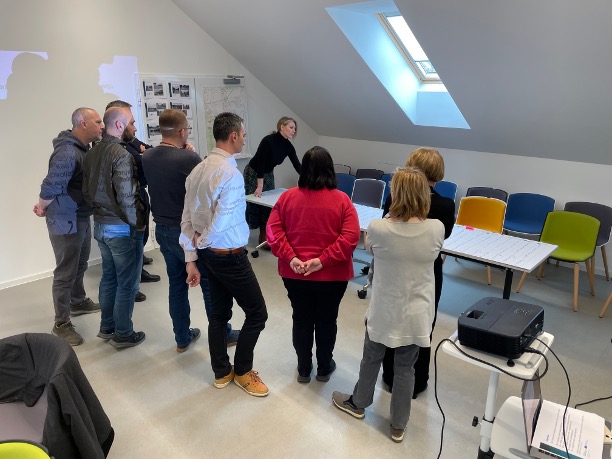
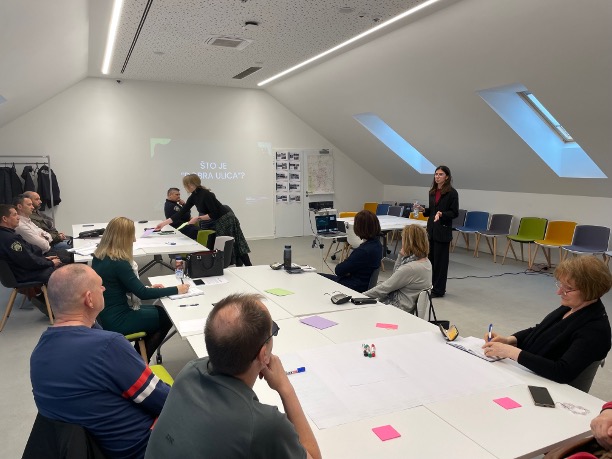
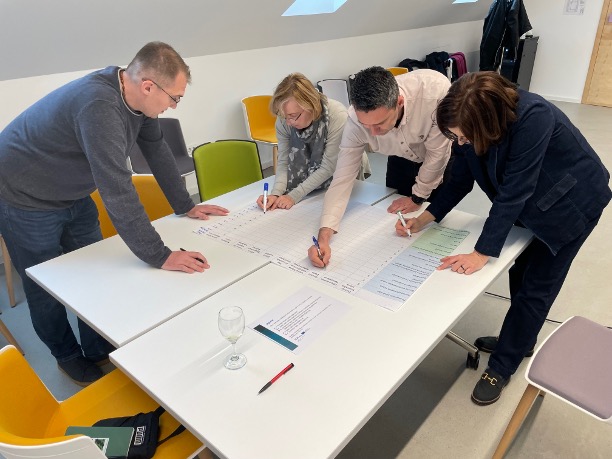
As one of the partners in the CityWalk 2.0 project, Karlovac followed the methodology of UN-Habitat, which helps bridge the gap between experts and the needs of the community. Through workshops and surveys, citizens were given the opportunity to openly discuss their experiences, needs, and the obstacles they face as pedestrians, cyclists, and users of public transport. Based precisely on the data collected in this way, the city identified locations where changes to public space are most needed and is now developing an action plan for their implementation. In fact, citizens often know where the problem lies even before a professional analysis is conducted, which is why communication with the local community is extremely important.
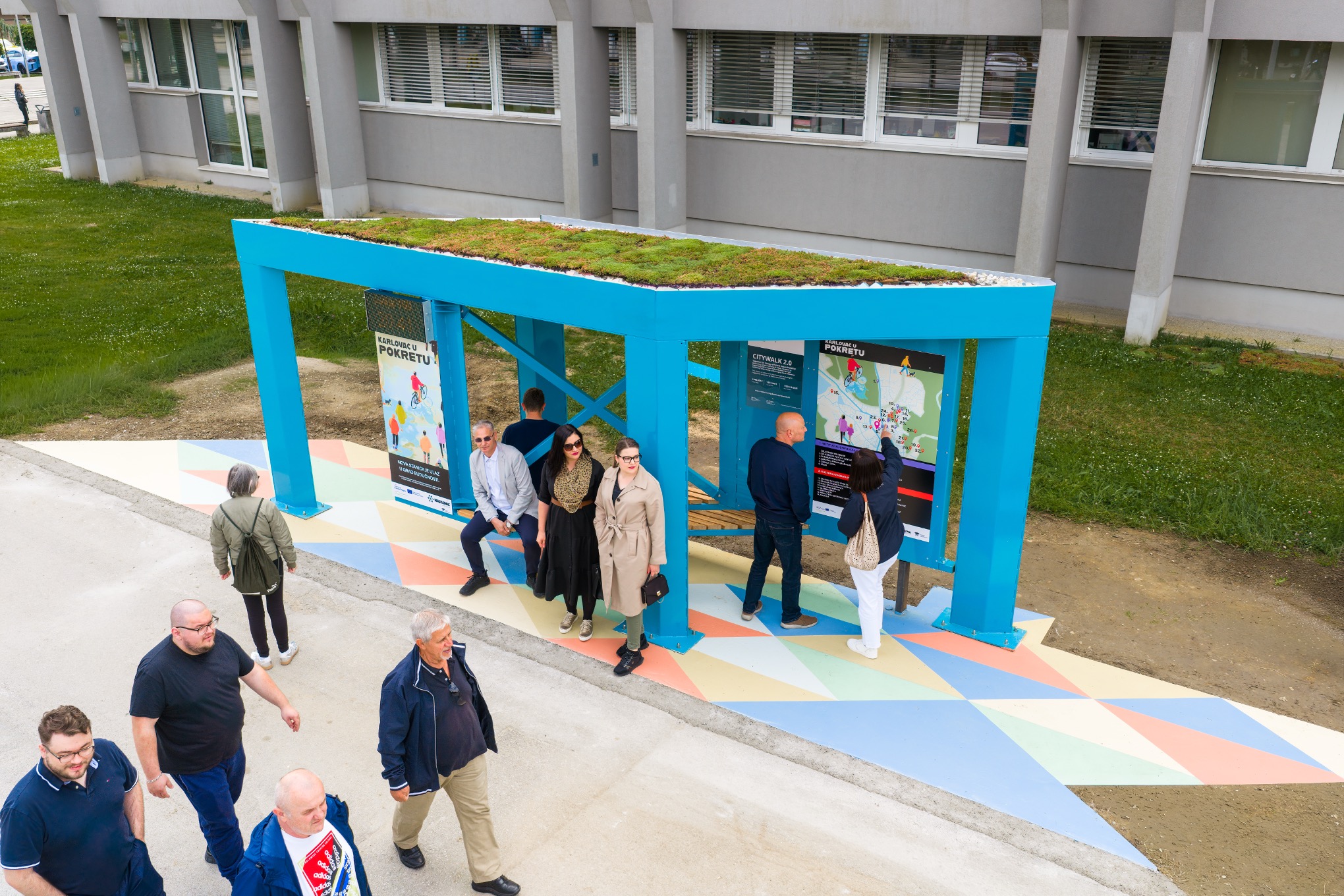
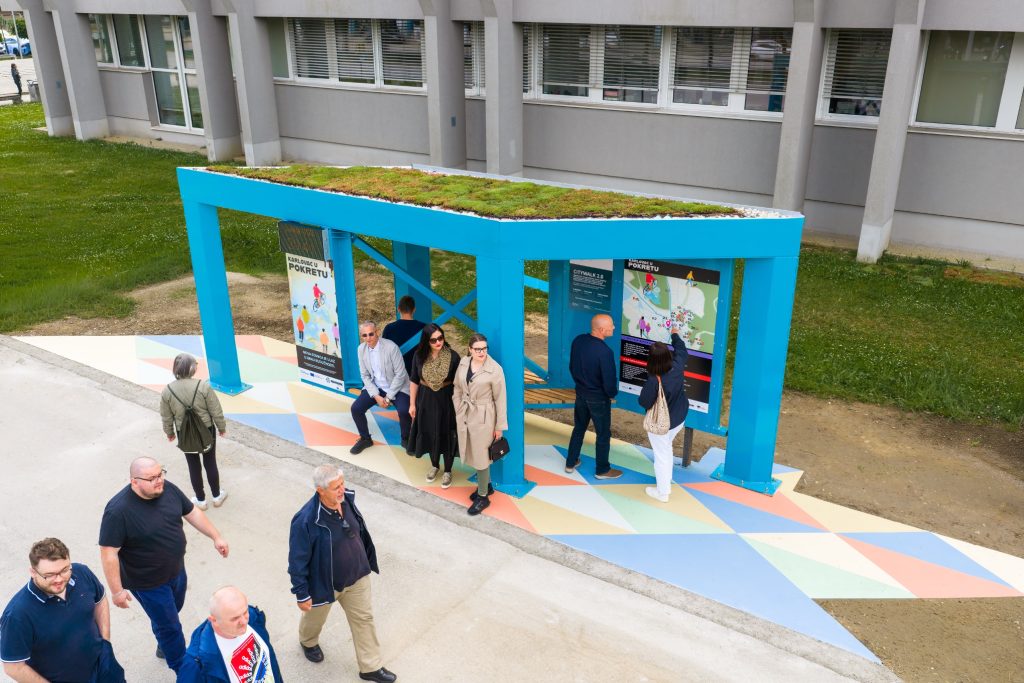
The first visible local result of the CityWalk 2.0 project is a new bus stop shelter in the city center, which not only provides protection and comfort, but also aims to guide citizens’ behavior toward more sustainable forms of mobility. Can the design of a bus stop encourage changes in the way an urban mobility system functions? Absolutely. A bus stop is not merely a technical boarding point for passengers, but a micro public space that shapes the everyday experience of the city, directly influencing citizens’ behaviour, their sense of safety, social inclusion, and the overall quality of public space.
Research has shown that when the waiting experience is positive, citizens are more likely to choose the bus instead of cars and taxis. At the same time, a bus stop can function as an information point for pedestrians and cyclists, promoting “safe routes” or attractive destinations within walking distance.
The Meaning of Micro-Interventions
Many people will rightly argue that attracting passengers to public transport requires far more than just a bus shelter: speed, safety, and reliability are the key determinants of public transport quality, and these are still areas that require significant improvement in Croatia. So what, then, is the significance of this small pilot intervention in Karlovac?
The greatest value of projects like these does not lie in the size of the intervention itself, but in changing the way people think. Cities are rarely transformed overnight through large and spectacular projects. Much more often, change begins with small but visible signals that show citizens public space can function differently. One well-designed shelter will not solve all the problems of public transport, but it can open the door to a new perception of the city and its priorities.
Such interventions serve another important role: they allow cities to test ideas before making major investments. Temporary or pilot spatial changes are now a standard tool of contemporary urbanism precisely because they make it possible to observe how people actually behave. Will citizens use the space? Will they spend time there? Will they change their habits? Instead of creating plans exclusively “from the top down,” cities learn from the everyday lives of their residents through small-scale interventions.
In cities such as Karlovac, where transport challenges are not only infrastructural but also cultural, this is especially important. Decades of adapting cities to cars have created the perception that driving is the only practical way to move around. In such a context, every intervention that redirects attention toward pedestrians, cyclists, or public transport users becomes more than an urban planning project — it becomes a social message. In this way, the city demonstrates what it considers important and whom it prioritises.
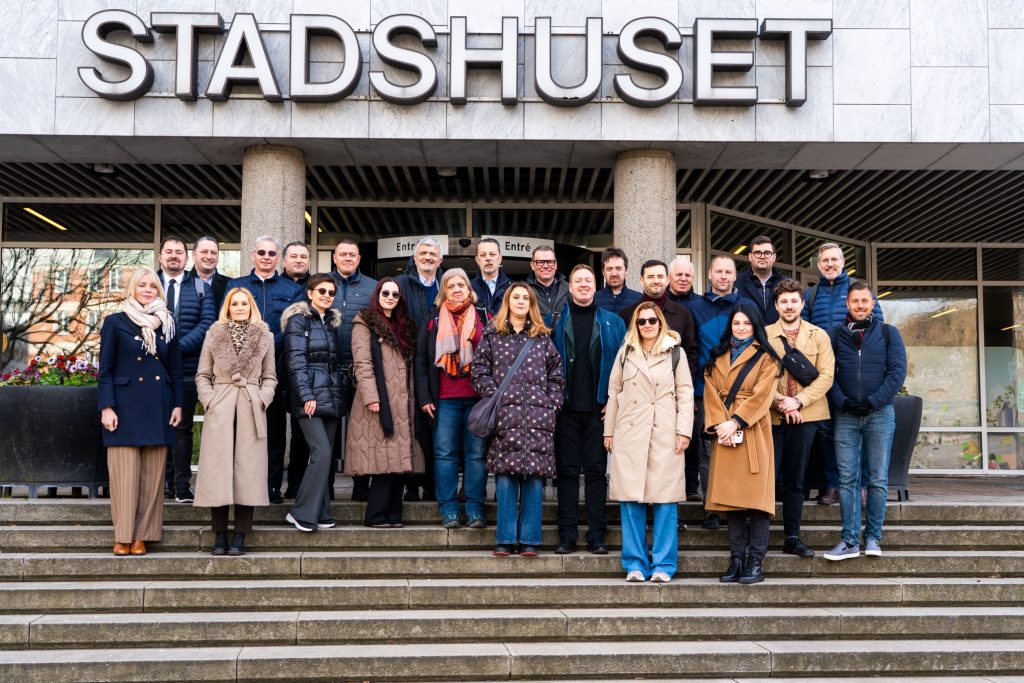
That is why the CityWalk 2.0 project, among other things, enabled decision-makers in partner cities to engage directly with the experiences of European cities that have systematically invested in pedestrian infrastructure and the quality of public space over recent decades. During a study visit held in April, mayors, deputy mayors, and city council members saw firsthand how Copenhagen and Malmö — the cities they visited — became more pleasant not because of new technologies alone, but because they prioritized the human experience of the city. Wider sidewalks, less traffic stress, more accessible public transport, more greenery, and more places to linger are all elements that gradually change the way people use urban space.
Good Public Space Is the Result of Collaboration
A city is a network of everyday experiences — a place where people wait for the bus, talk on a bench, take their children to school, pause spontaneously, or choose to walk instead of drive. When cities involve citizens in the planning process, public space is no longer the result of assumptions, but of collaboration. In this way, professional expertise is validated through the everyday experiences of residents, and changes happen where they are most needed.
An important realization is that no one chooses a car solely because of speed; people choose it because the alternatives are not good enough. When public space and transport become attractive and functional, sustainable habits emerge naturally rather than through coercion.
That is precisely the direction promoted by the CityWalk 2.0 project, and the path that Karlovac has decided to follow. In that sense, the pilot bus stop redefines Karlovac as a “city of encounters,” offering a new point where encounters can and should happen — a street accessible to everyone.
The original version of our article, published in Croatian can be found here.